
Specialist Dental Implant Treatment at Link House
Here at Link House Dental in Brighton, we are experts in reconstruction using dental implants. We believe in integrated treatment with multiple specialists available in one state-of-the-art clinic, and we strive to achieve the optimum level of health, aesthetics and function for your mouth.
Our approach to tooth replacement is different from that of most dental practices. We do not offer unique dental implants as we do not believe in a “one size fits all approach.”
Replace Your Missing Teeth
There are several ways to replace missing teeth. While in some cases, the treatment plan may be straightforward and not require complex planning, there are often different solutions that should be considered.
We are here to guide you in the decision-making process and find the best solution for you, your mouth and your teeth.
Why Choose Dental Implants at Link House, Brighton?
- A long-lasting fixed alternative to removable dentures.
- Avoids damage to adjacent teeth as required by bridges.
- Confidence that the fixed bridge or tooth replacement feels as secure as a natural tooth.
- Provide high levels of support for the replacement of several teeth.
- The ability to chew and enjoy your food in a similar way to that achieved prior to tooth loss.
- Predictable results.
Helping you choose the perfect solution
There are many different solutions and materials available, but don’t worry. Our specialists have the knowledge and expertise to select the best solution for you. We are here to provide all the information you need and help you make the right choice for your smile.
Our aim is to achieve the highest level of personal care by providing the latest in dental care, including restorative and cosmetic treatment.
Specialist Dental Implant Procedures at Link House Dental
Our aim is not to simply “fill the gap”. We offer a comprehensive approach, evaluating immediate dental needs and strategically planning your future dental needs. Link House is also one of the few dental practices in the south of England with the in-house expertise to deal with dental implant complications. We can assist in resolving problems arising from inadequate treatment planning and execution.
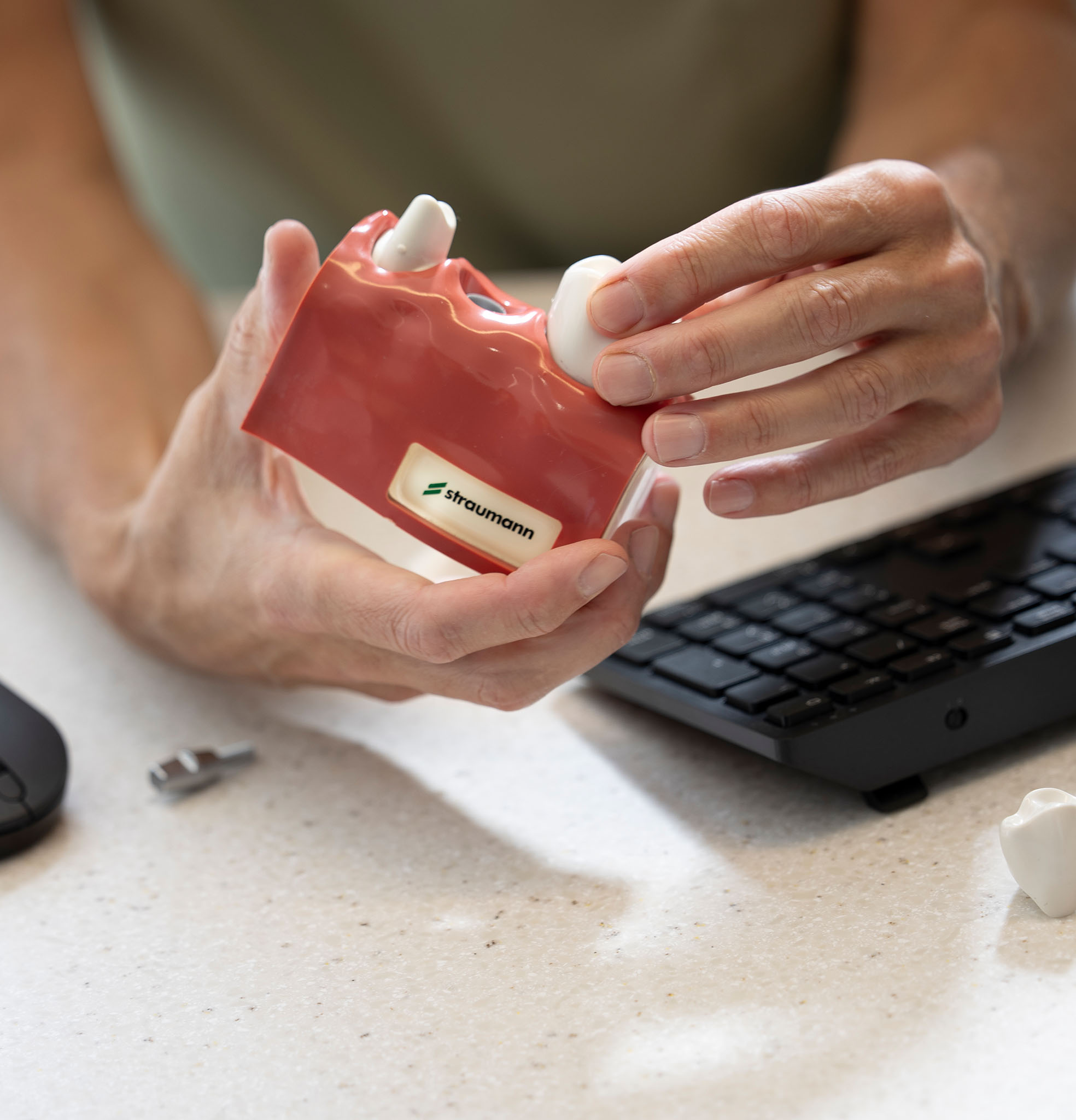
We primarily use Straumann implants, which are considered the industry’s gold standard. The company is well known for its extensive and ongoing research program and has long-term clinical data supporting its implant system. Straumann is the main partner of the International Team of Implantology (ITI), the largest international academic organisation in implant dentistry and related tissue regeneration, with which our clinicians are proudly affiliated.
Link House Dental Implant Options
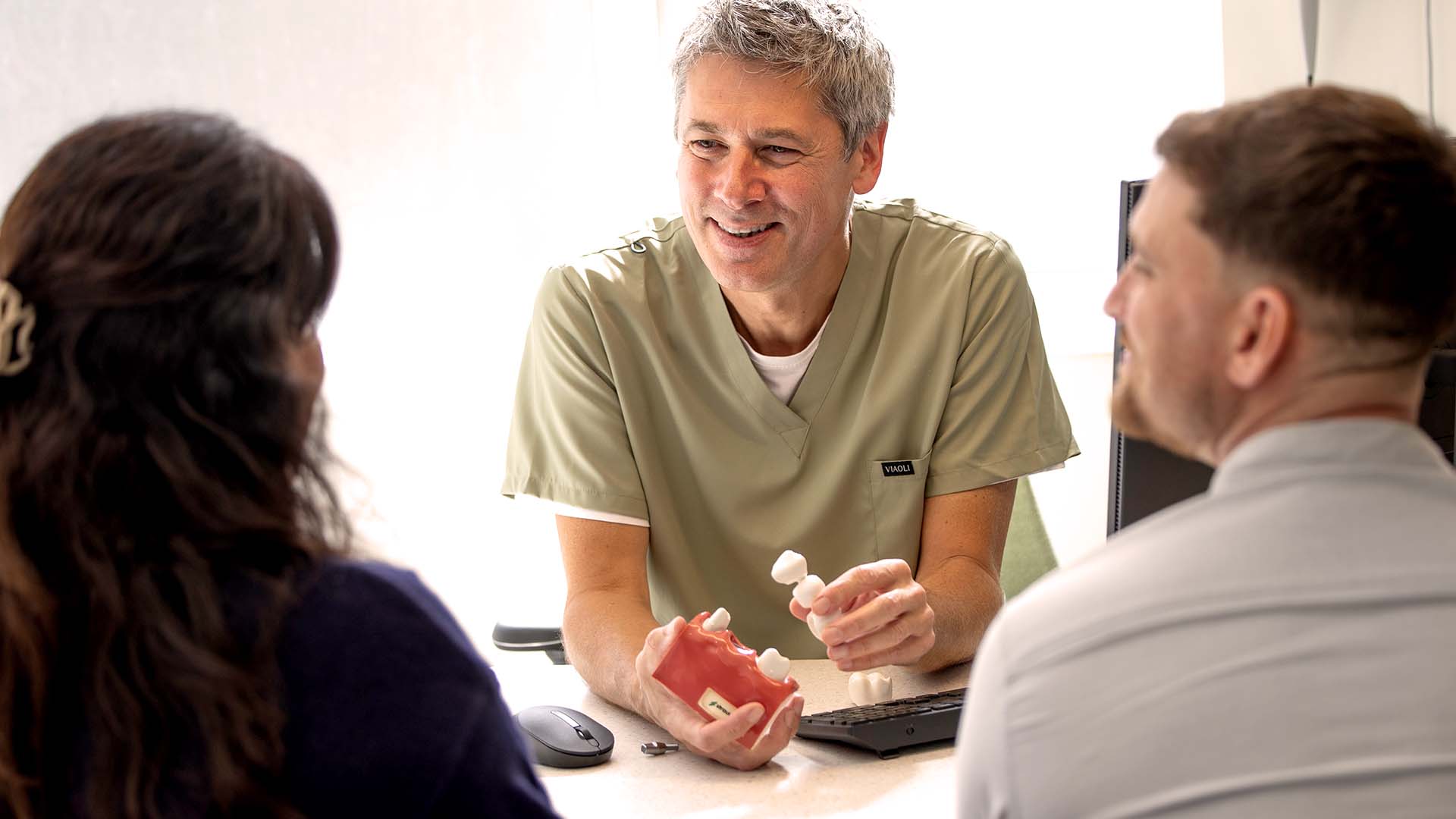
Which is the best replacement option for you? When considering whether and how to replace a tooth, multiple things must be evaluated: strength, longevity, length of the treatment, aesthetics and, of course, the cost.
A gap
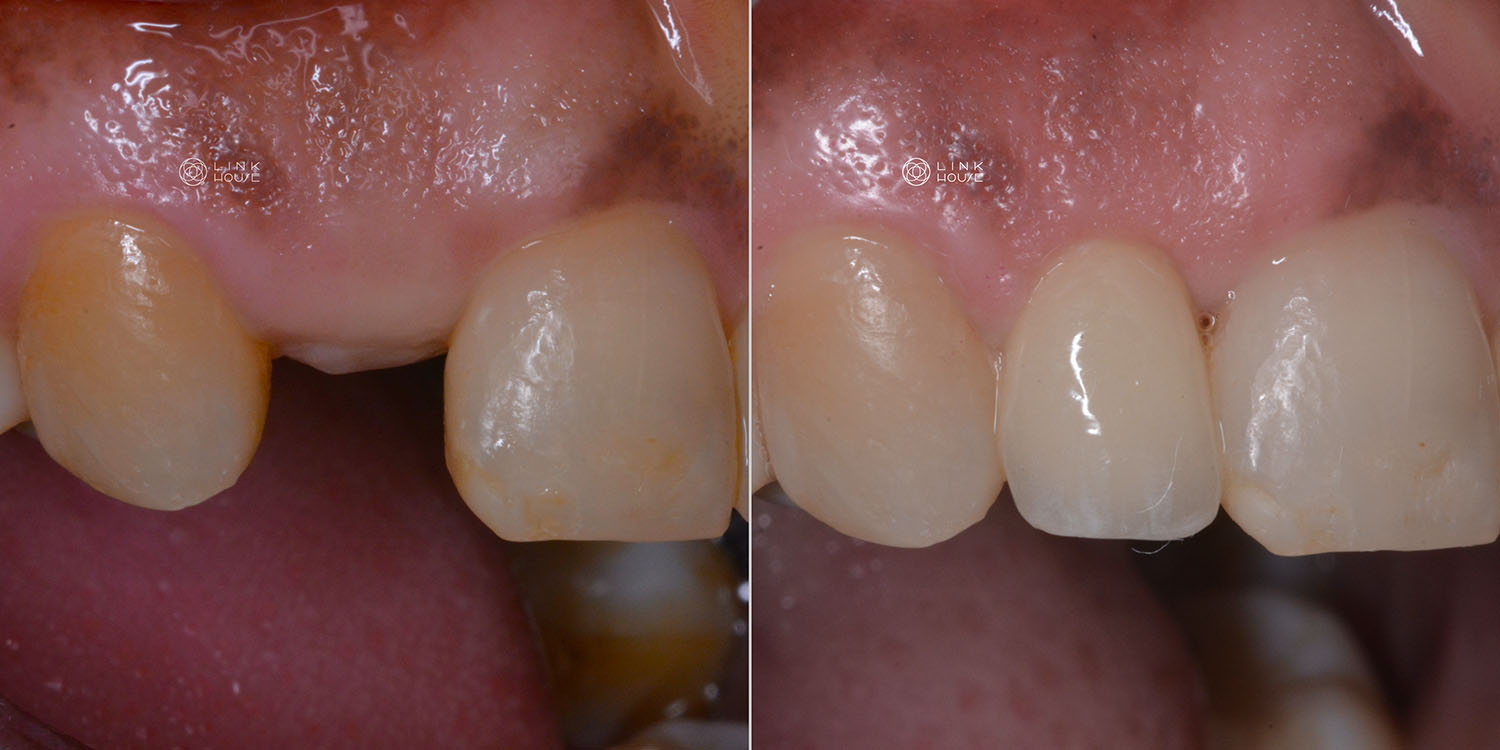
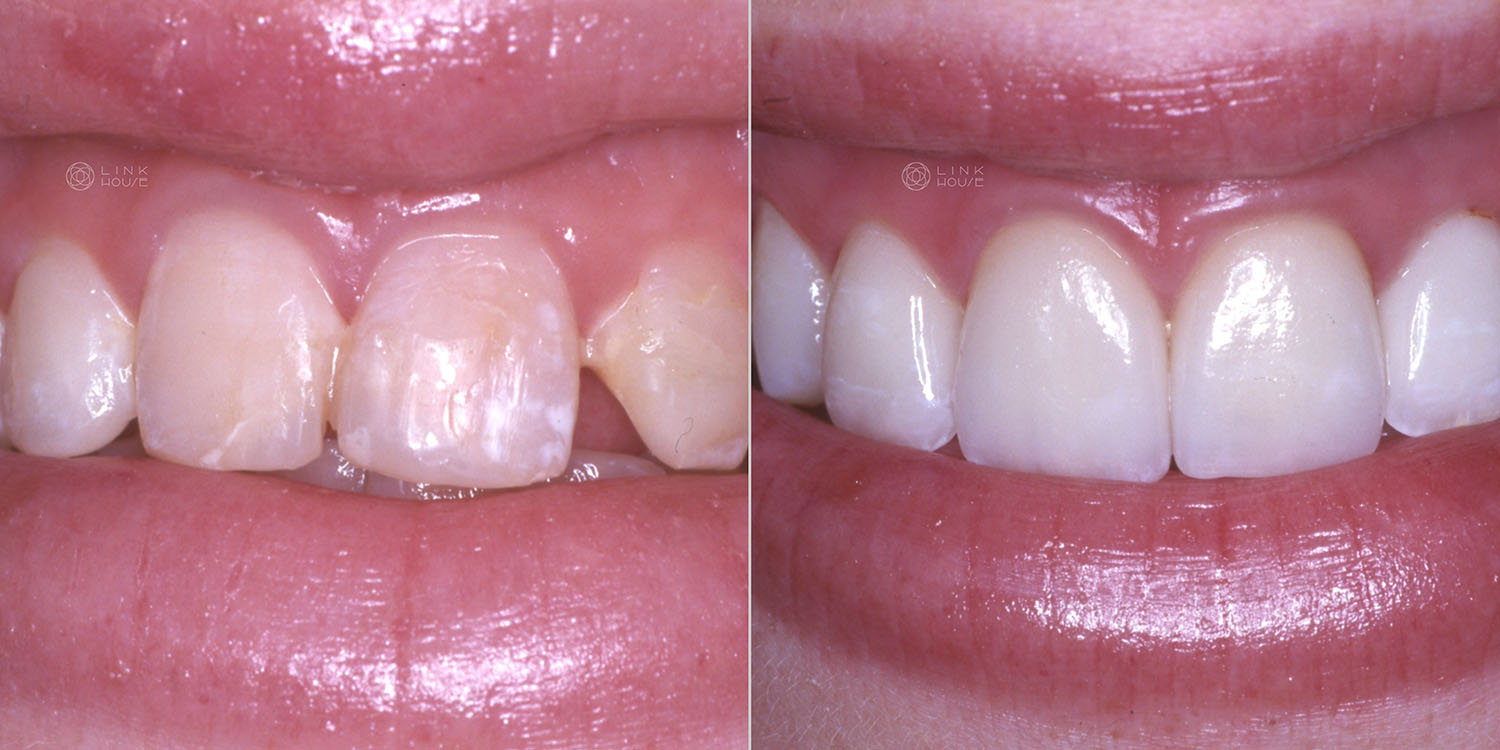
Not all teeth need to be replaced. Accepting a gap can be an option if the missing tooth isn’t noticeable and you can still chew and function correctly. However, the teeth adjacent to the gap can often tilt into the space. The opposing tooth may grow taller. These changes can interfere with your bite, causing short and long-term issues. Repositioning the teeth can be difficult and may require a lengthy course of orthodontics.
A bridge
Where one or a few teeth are missing, the teeth on either side of the gap can be capped and used to support a bridge (a floating tooth). The bridge is cemented in place and would feel secure. Generally, bridges last between 5 and 15 years, but their longevity depends on the health of the supporting teeth.
A denture
A partial denture can be used to replace one or more teeth. These are usually supported by the remaining teeth and gums and kept in place by wrapping around the remaining teeth. A complete denture can be used to replace a whole dental arch. Dentures can be very successful but tend to feel less secure than a bridge or an implant. Another disadvantage of dentures is that they are removable and should be removed for a few hours daily (usually at night). We can often use dental implants to provide more anchorage and support to the dentures and reduce the movements.
Orthodontics
It is sometimes possible to close the gap or shift the teeth into a different position. This is achieved by orthodontic (e.g. invisible braces or “train tracks”).
A dental implant
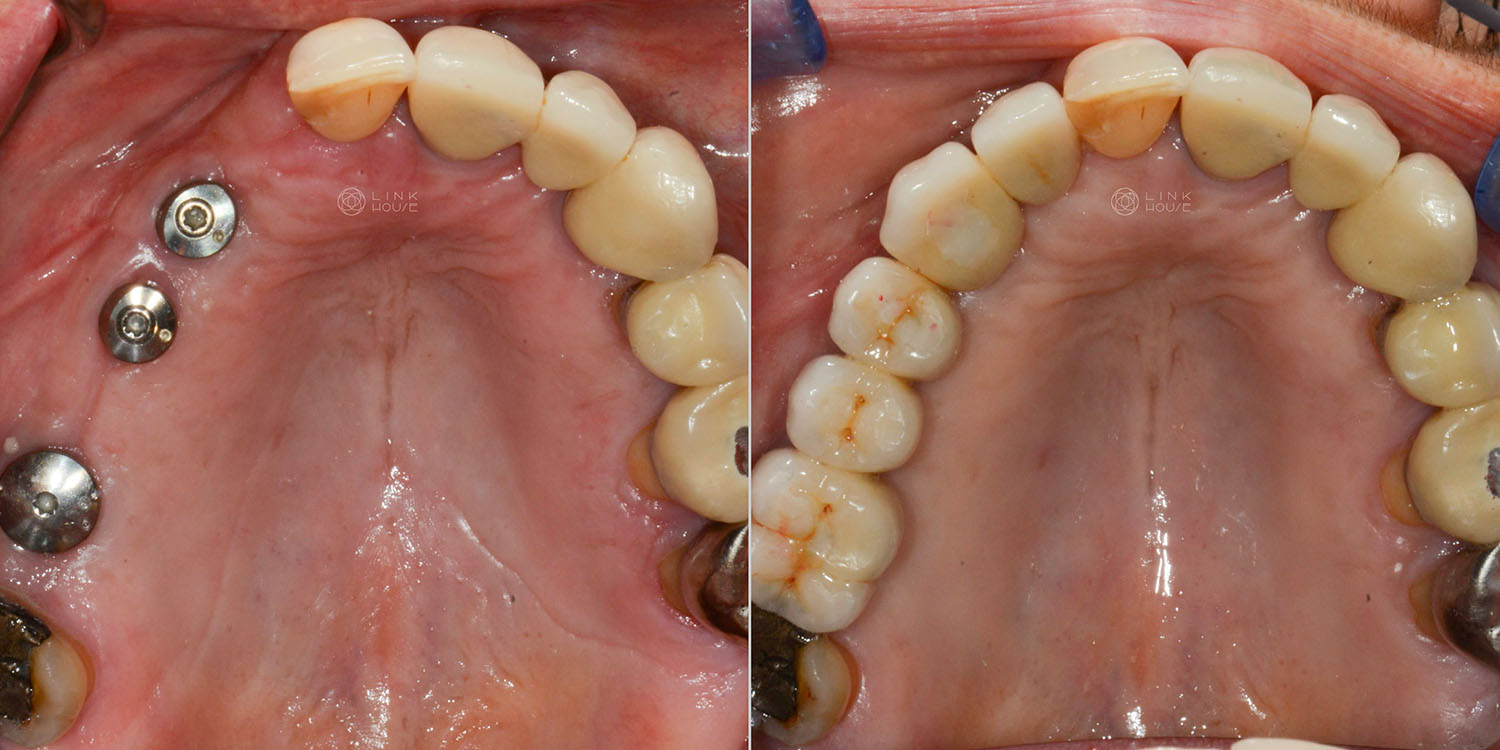
An implant is a prosthetic tooth root that is gently placed into the bone. The artificial root heals by fusing with the jawbone, supporting a new tooth.
Our aim is to achieve the highest level of personal care, providing the latest in dental care, including periodontics, restorative and cosmetic treatment.
To book an appointment, enquire about our services or make a referral, simply click the button below.
Frequently Asked Questions
Below are some frequently asked questions about Link House’s dental implant services. Should you not find an answer to your question, please get in touch with us, and a Link House Dental team member will be happy to help you.
What is a dental implant?
Although commonly described as “replacement teeth”, dental implants are more accurately replacement tooth roots. Implants are permanent solutions to one or more missing teeth. The small titanium screws are placed and are allowed to integrate with the bone to act as artificial roots. Being made of titanium, they are completely “biocompatible” – there is no possibility of “rejection”. The implants then support the artificial teeth above, like natural tooth roots anchor natural teeth. This allows improved function, speech and aesthetics.
What can dental implants be used for?
Dental implants are used when a tooth or teeth have been lost. An implant can be used to:
- Replace a single tooth: Dental implants are an ideal solution for replacing a single missing tooth and eliminate the need to grind down healthy adjacent teeth for a bridge.
- Replace several teeth: Implants can be used to replace and support individual crowns or bridges. Support from adjacent healthy teeth is not necessary because implants act as replacement tooth roots.
- Replace all teeth: In addition to looking and functioning like natural teeth, implant-supported full bridges and dentures are designed to be a stable and effective long term solution. Implants eliminate the need for adhesives to keep dentures in place.
Can anyone have dental implants?
Generally speaking, anyone missing one or more teeth due to injury, disease or decay may be a candidate for dental implants. There are very few cases where implants can’t be provided. “Not having enough bone” does not mean you cannot have implants. Some patients may not have enough suitable bone to place the implants. This can, however, be rectified by our expert surgeons. The main limitation of treatment is what the patient is prepared to undergo.
Age is certainly not a limiting factor, although it is inadvisable to place implants in growing individuals.
Smokers are slightly more likely to develop problems with dental implants, as smoking has a significant and detrimental effect on the progression of periodontal (gum) disease, which can affect implants and teeth alike.
Our specialists will carefully evaluate your dental and health history to determine if you are a candidate for dental implants. Remember, a dental implant may not be the best solution for you, and we will advise accordingly and discuss alternative solutions.
Why should I replace my missing or failing teeth with dental implants?
Implant-supported replacement teeth look, feel and function like natural teeth. This means that you can eat and drink whatever you are used to. But most importantly, dental implants often improve the quality of life in a very concrete way. People who have felt embarrassed and worried because of their tooth problems are often overwhelmed by what new permanent teeth can do for their self-esteem.
Missing teeth can affect how you speak and how you bite and chew food, restricting your diet. Additional strain is put on remaining teeth, and over time your jaw bone will start to resorb (shrink).
Will I need one implant for each missing tooth?
No, unless, of course, only a single tooth is being replaced. Where a few teeth are missing, two or three implants are sufficient. For a non-removable solution, it is usual for six implants to be used in the lower jaw to support 10-12 teeth, with eight implants normally being used in the upper jaw. Fewer implants can secure removable dentures (“implant over-denture”).
How are dental implants placed?
We spend time carefully planning the procedure and the proposed implant position. Most of the planning can be done digitally on screen, where we can visualise the area with extreme precision and assess which type, shape and size of implant is most suitable. A surgical guide is then fabricated, which will allow the transfer of this information and aid us in placing the implants. This ensures the implant is placed in the correct position. The minor surgical procedure is carried out in the dental chair. All of our surgical procedures are carried out with a strict sterile setup.
Does dental implant treatment hurt?
The procedure is always performed under local anaesthesia (injections to numb the area). If you are uncomfortable with this option, we can also consider giving you sedation. We offer different forms of sedation, and we are happy to discuss the best solution for you. Following the procedure, some discomfort is expected. Pain management would be discussed before the procedure, but this usually involves over-the-counter painkillers. Most patients report that they had significantly less pain following the procedure than they had anticipated. You will have some stitches, which are usually dissolvable. Our patients are provided with an emergency contact to discuss any concerns with a clinician.
If I need a tooth extracted, will I be left with a gap until the implant is provided?
No, we would never plan to leave you with a gap at any point during treatment. We have different treatment protocols to replace teeth with implants. An interim replacement tooth is sometimes required while the bone and implants heal. This can take the form of a provisional bridge or a removable denture. In some cases, it is possible to shorten the healing period by placing and restoring the implant on the same day. These options will be discussed at your initial consultation.
I’ve been told I don’t have enough bone for implants. What are my options?
The bone supporting the teeth will start resorbing (shrinking) after a tooth is removed. This can limit the volume of bone available to place an implant in the correct position. In some areas of the mouth, important anatomical structures can interfere with implant positioning. It is not uncommon to require a bone substitute or a bone graft. This can often be provided at the same time the implant is placed. However, in some cases, the bone graft material must be placed and left to heal for some time before the implant can be placed. Different materials can be used for these procedures, and we would be happy to discuss your options at Link House.
How long do dental implants last?
With proper aftercare, implants should last for many years. Recent research has shown better success rates when implants are carefully planned and provided by experienced surgeons. At Link House, all of our implant treatments are planned by a team of specialists, not a single clinician. All implants are placed and restored by registered specialists with audited track records.
Do I need to be referred by a dentist for implant treatment?
A referral is not required. However, we encourage patients to have a referral from a dentist. This provides us with details about your dental health and can reduce the need for unnecessary radiographs or investigations.
What happens at the initial dental implant consultation?
When you visit us for an initial consultation, we will take time to listen to you, discuss your previous dental treatment and experiences and identify your concerns. We will then perform a detailed examination of your whole mouth and take x-rays as required. This is nothing to be frightened of, just a very thorough look around so we can get an accurate picture of your oral health. We will then take time to discuss the current status and the possible treatment solutions. All treatment options are, of course, discussed with you on an individual basis, and written treatment plans and estimates are provided. If a dentist has referred you, we will also liaise with them and write a report for them. Usually, the consultation lasts 45-60 minutes; during this time, you can ask any questions you have.
How much does dental implant treatment cost in Brighton & Hove?
Treatment fees will depend on several factors, including the number of teeth being replaced and the number of implants needed to support your replacement teeth. Some additional procedures may be required prior to the placement of your dental implants to ensure long-term success. We always provide a written fee estimate and treatment schedule following a thorough diagnostic examination, during which the specialist will recommend the best treatment for you.
Are dental implants easy to look after?
Implant-retained replacement teeth must be cared for and checked regularly, just like natural teeth. Implants are susceptible to periodontal (gum) disease just like teeth. You will, therefore, need to see the hygienist regularly, but most importantly, your oral hygiene will need to be maintained at a very high standard. Put simply, if you look after your implants, they will look after you!