
Specialist Endodontic root canal treatment at Link House
What is Endodontic Treatment?
Endodontic treatment, often referred to as Root Canal Treatment (RCT), is a treatment used to repair and save a tooth that is badly decayed or has become infected. “Root canal” is the term used to describe the natural space within the centre of the tooth. The pulp (tooth nerve) is the soft tissue within the root canal space.
Usually, the treatment involves carefully cleaning and disinfecting, then filling the root canal space. This allows a tooth to be retained that might otherwise require extraction. Without treatment, the tissue surrounding the tooth will become inflamed, and an abscess is likely to form.
When to See a Link House Root Canal Specialist
Your natural teeth are worth saving. Luckily, Link House Dental in Brighton offers specialist endodontic services with state-of-the-art facilities and equipment.
If you’re experiencing tooth pain or sensitivity, suspect a cracked tooth or have suffered dental trauma, or your dentist recommended root canal treatment, you should see a Specialist in Endodontics who is an expert in diagnosing and treating tooth pain.
Why choose a specialist for endodontic treatment?
Although general dentists can perform endodontic treatment, patients are often referred to a specialist when the case is complicated to diagnose, when the treatment is more difficult than usual or when special equipment is required.
A Specialist in Endodontics is a dentist with additional special post-graduate training and experience in this field. Their additional training focuses on diagnosing tooth pain and root canal treatment and other procedures relating to the interior of the tooth. By limiting their practice to root canal work, endodontists focus exclusively on treatments of the dental pulp. They complete an average of 20 root canal treatments a week, while general dentists typically do two or three.

Cutting-Edge Endodontic Technologies at Link House
We have all the materials and equipment designed to make your treatment more comfortable and successful.
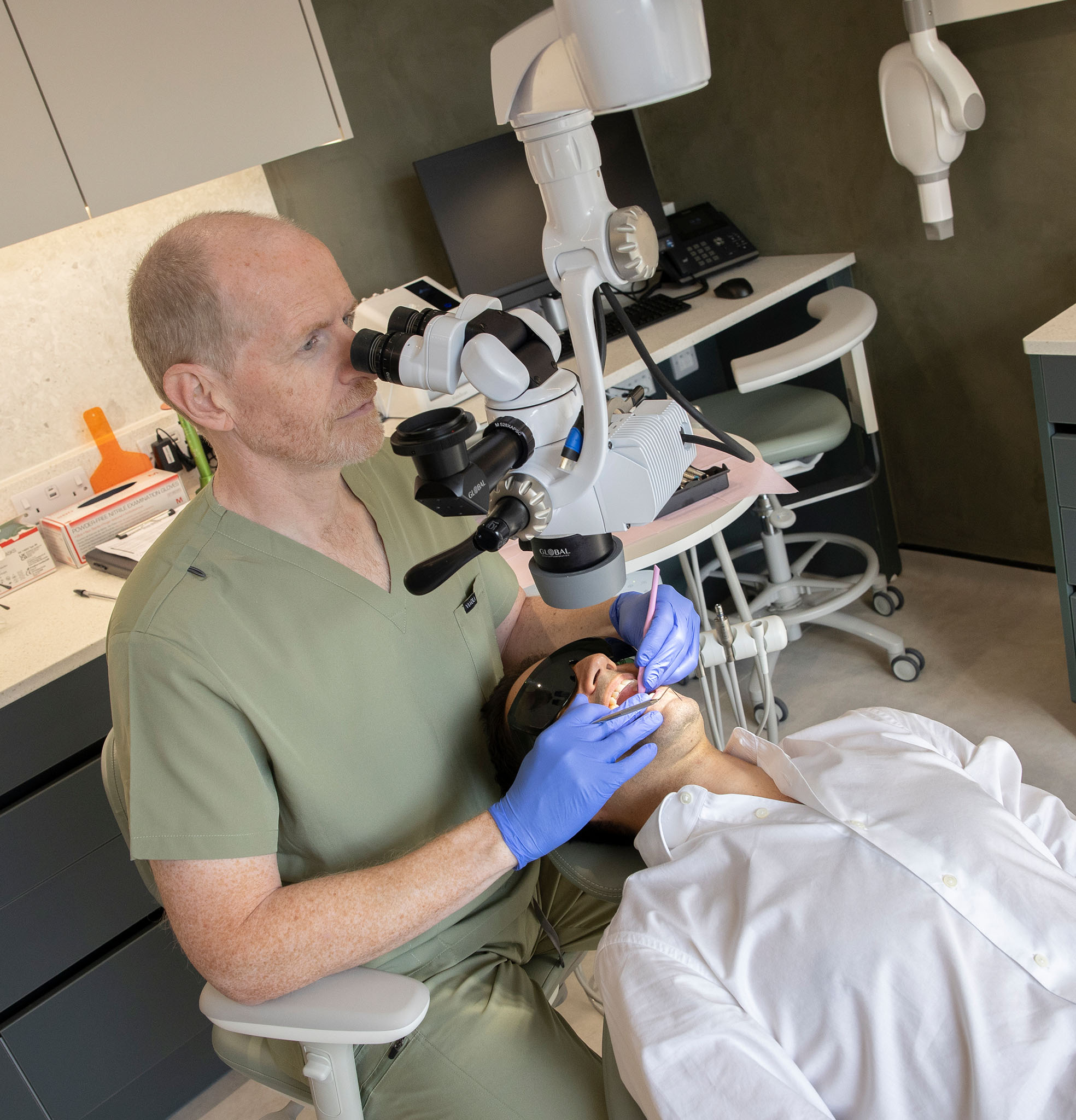
Our root canal specialist routinely uses a high-magnification operating microscope, high-definition/low-dose CBCT scan, ultrasonics and an electronic apex locator.
Failed Endodontics Treatment
When conventional endodontics has failed, direct access to the root tip may be required (“retrograde endodontics”). Micro-surgical endodontic treatment involves accessing the tooth’s tip, removing the infected tissue, and sealing the root end.
To book an appointment, enquire about our endodontics services or make a referral, simply click the button below.
Frequently Asked Questions
Below are some frequently asked questions about Link House’s specialist endodontic services. Should you not find an answer to your question, please get in touch with us, and a Link House Dental team member will be happy to help you.
What are the signs of an infected tooth?
- A pimple-like bump on your gum, called a fistula, that drains pus.
- A tooth that’s discoloured, grey, or black.
- Pain when you eat or touch the tooth.
- Swelling of the gums.
- A wobbly tooth.
- Bad breath or an unpleasant taste in your mouth.
I don’t feel pain in the tooth anymore. Do I still need a root canal?
When a tooth is sensitive to hot and cold and suddenly the sensitivity stops, it is not because the tooth has healed on its own. Even if you no longer feel pain, the infection will still be present in the tooth. You can no longer feel anything in that tooth because the tooth has died. The tooth cannot heal on its own and, therefore, requires a root canal to remove the infection and properly heal. If the infection is not treated, it can spread and cause more damage.
How long does the root canal procedure take?
The treatment usually takes one or two visits. The infected pulp is removed, and the inside of the tooth is carefully cleaned, disinfected and sealed. Afterwards, the tooth is restored with a filling or a crown.
What are the benefits of root canal treatment?
Saving the natural tooth is very often a wise choice, and root canal treatment is the best way to do so. The tooth will continue to look and feel natural. The alternative of extracting and replacing the tooth can often take longer and cost more, and the results may not be as good as those of your natural tooth. Most dental insurance plans cover endodontic treatment.
Are root canals painful?
That may have been the case a decades ago, but with modern technology and aesthetics, you won’t experience any more pain than if you went to have a filled. The pain from a severe toothache, often caused by damaged tissues in the tooth, can be easily remedied when the damaged tissue is removed through root canal treatment. Root canal specialists are experts in administering numbing medications, especially in patients who traditionally have problems getting and staying numb. Root canal patients are six times more likely to describe the procedure as painless than patients who have had an extraction!
Does the root canal weaken the tooth?
After the procedure, the tooth no longer has a nerve, eliminating the blood supply. This causes the tooth to become more brittle. In a follow-up appointment, a crown or filling is placed to protect and seal the tooth.
Will I need additional treatment?
Following successful root canal treatment, you may need a crown or filling. This is to protect the tooth from breaking, reinfection, and other issues.
What is the expected recovery process?
Typically, it takes less than a week to recover from a root canal. You may need to take over-the-counter painkillers such as ibuprofen or paracetamol. Your tooth and gums go through a lot during a root canal. You can help them heal by eating soft foods for the first few days after treatment, avoiding chewing on your treated tooth if you’re waiting on your permanent crown, and practicing good oral hygiene.
Will the treatment have to be repeated?
No, root canal therapy is not only successful for a short period. With proper care, a root-treated tooth can last a lifetime. Approximately 90-95% of root treatment teeth will still function after 10 years.
What are the alternatives to root canal treatment?
If you need a root canal, that is the best option for preserving your natural tooth. If left untreated, the infection will progress. You are likely to experience:
- Swelling, which may spread to other areas of the face, neck, or head.
- Bone loss near the root and, eventually, tooth loss.
- Infection around the tooth and gum.
- A hole may develop on the side of the tooth.
- More pain and more intense pain.
- The other option is tooth extraction.
Do you provide sedation?
Yes, we can provide sedation; you can find more information here.