
Specialist Oral Surgery at Link House
At Link House Specialist Dental Centre in Brighton & Hove, we offer multiple oral surgery procedures to restore your oral health and improve your quality of life.
Bone grafting
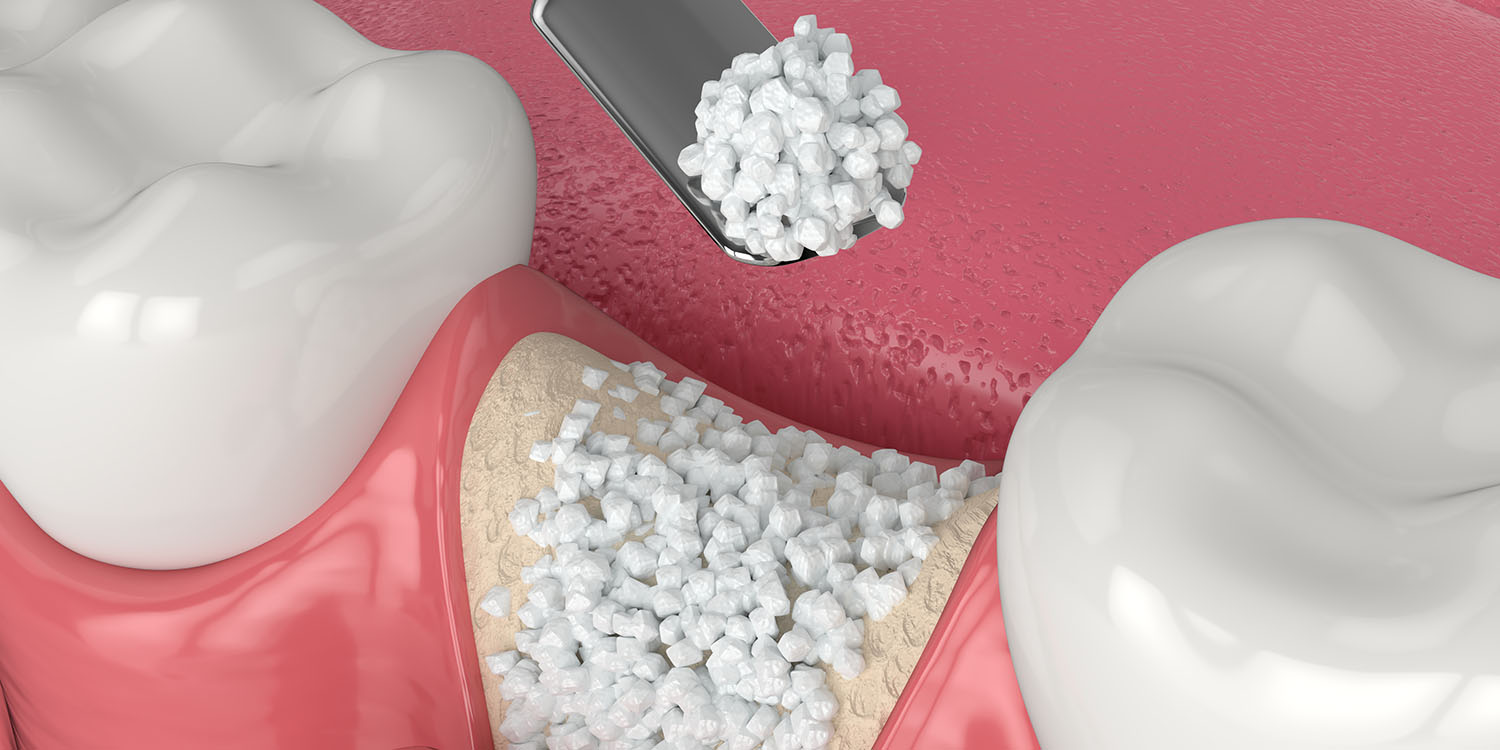
A bone graft or augmentation may be necessary if your jawbone isn’t thick enough to support a dental implant. Depending on your individual needs, this procedure can be done either before or during the implant placement.
A dental implant is a replacement tooth root inserted into the jawbone to support one or more teeth. For successful implantation, your jawbone must be strong enough to support the screw. However, bone loss can occur for various reasons, such as tooth extraction, gum disease, infections, or injury to the mouth, all of which can result in insufficient bone volume.
Bone augmentation or grafting offers a solution to this problem. This common procedure involves replacing the lost bone with either a bone substitute material or bone taken from another area of your mouth.
Depending on the extent of bone loss, you may require one of the following options:
- Minor Bone Augmentation (Simultaneous Augmentation): This can be performed alongside implant placement if the bone loss is minimal.
- Staged Bone Graft: For more significant bone loss, a staged approach may be needed. The bone graft is placed and allowed to heal for a few months before the implant is inserted.
What Materials Are Used for Dental Bone Grafts?
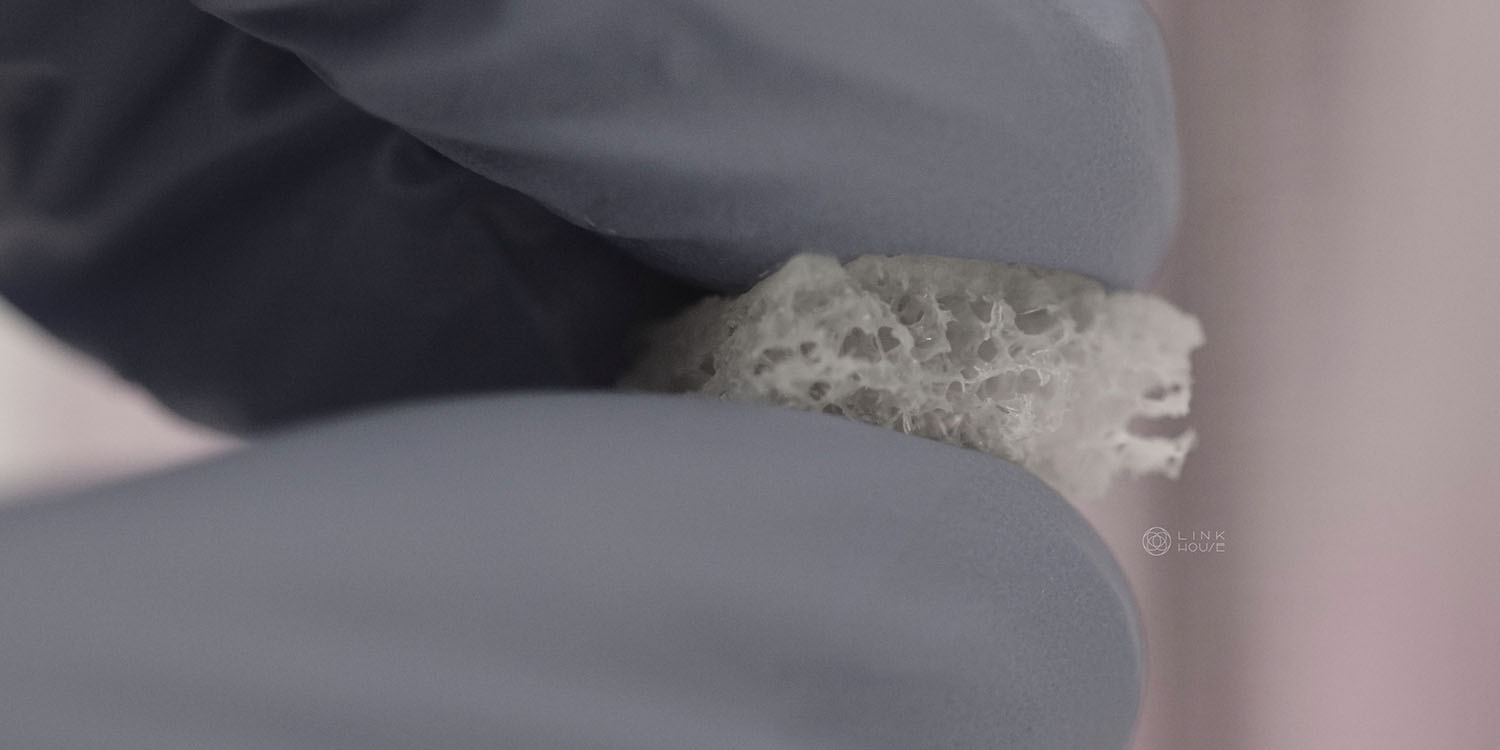
A dental bone graft usually involves two main materials: a bone filler and a barrier membrane.
- Bone Filler: This material replaces the lost bone. Common types include:
- Xenograft: Bone derived from animal biomaterials, used safely for decades.
- Alloplast: A synthetic material created in a laboratory.
- Autograft: Your own bone, typically collected from the implant site or taken from another area in your mouth.
- Barrier Membrane: A barrier membrane is applied over the graft to protect it during healing.
- Resorbable Membranes: Dissolve naturally over time and do not require removal.
- Cortical Bone Plates: These are very thin sheets of natural bone adapted and placed over the graft.
- Non-Resorbable Membranes: Different materials can be used, depending on the indication., These membranes need to be removed once the graft has integrated.
Sinus Lift
Placing implants at the back of your upper jaw can often be complicated by the presence of the maxillary sinus. There are large air spaces in the cheek bones, which can limit the amount of bone available for the placement of implants. The solution is a sinus lift procedure, involving adding bone below the sinus space.
In some cases it is possible to place the implant at the same time of the sinus bone graft. The implants can then be restored after a few weeks. However if the remaining natural bone is too thin, the bone graft need to be placed and left to heal for a few months, before the implants can be placed.
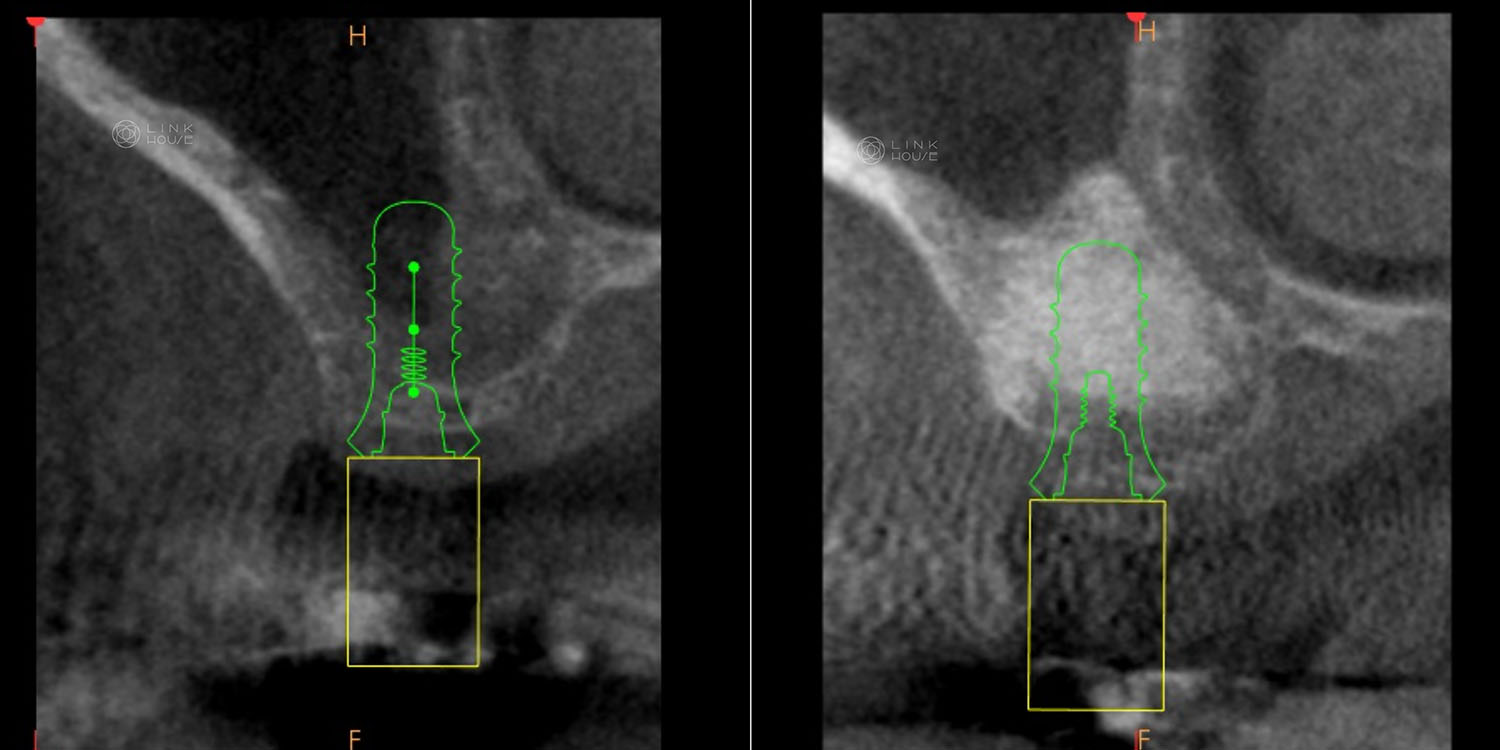
The area is typically assessed using a 3D CBCT scan, which offers a highly accurate view of the jawbone and sinuses. Based on the scan results, a suitable treatment approach—whether straightforward or more complex—can be chosen. Modern technology allows the procedure to be meticulously planned and simulated on a screen, helping to make the actual treatment quicker and safer.
Ridge preservation
A part of your jawbone contains sockets for the roots of your teeth, called the alveolar ridge.
When a tooth is removed, the bone supporting it gradually shrinks. The more the bone shrinks, the more difficult it is to place an implant in exactly the right position. Furthermore, bone shrinkage can affect the final aesthetic outcome of the implant tooth.
The timing of the implant placement is therefore critical. If the placement of the implant is delayed for over a few months after the removal of the tooth, it can be helpful to place bone filler into the root socket. This has been shown to reduce bone shrinkage.
Complex Extractions
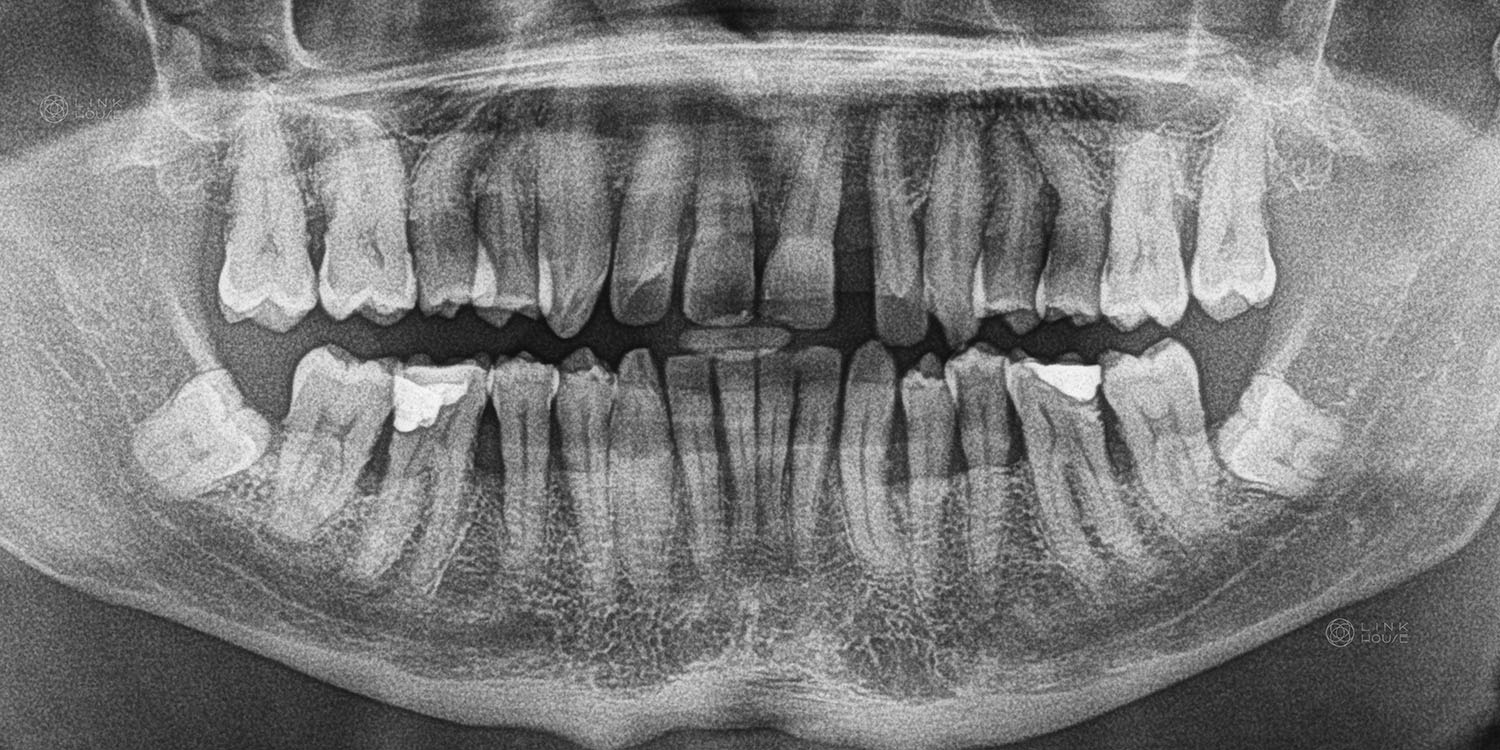
Simple extractions are routinely performed by dentists. However, in some cases, the tooth may have broken off at or below the gumline, and there may not be sufficient tooth structure to enable simple removal. In other cases, the tooth is very decayed, broken or has curved, brittle roots.
At Link House, you will be looked after by one of our Specialists, who will ensure that the tooth is removed using specialised equipment in the least traumatic technique. This is also crucial in ensuring that bone can be preserved, which is an important consideration for implant treatment at a later stage.
Wisdom Tooth Removal
The wisdom tooth (or third molar) is usually the last tooth to erupt into the mouth, usually after 16 years of age. Frequently, there is not enough room to accommodate wisdom teeth, so they do not come into the mouth normally. When this happens, the wisdom teeth are said to be “impacted”. Wisdom teeth are usually either impacted forward into the tooth in front or backward into the jawbone.
An impacted tooth can cause several problems. Most commonly, these include repeated attacks of infection in the gum surrounding the tooth, which leads to pain, swelling and bone loss. Food packing can also cause decay in the wisdom tooth or the tooth in front.
To book an appointment, enquire about our services or make a referral, simply click the button below.